Fabric 101 for Bag Buyers: Polyester vs Nylon vs Cotton vs Jute vs RPET
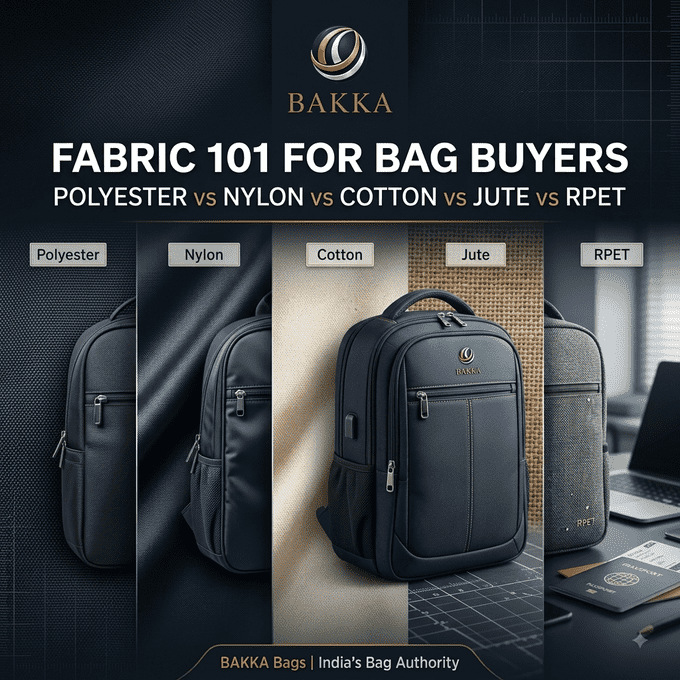
Fabric 101 for Bag Buyers: Polyester vs Nylon vs Cotton vs Jute vs RPET 🧵
By BAKKA Bags | India's Bag Authority
The Fabric Is 80% of the Bag. And 90% of Buyers Choose It Wrong.
Walk into Sadar Bazaar, Delhi 🏪, Chickpet, Bangalore, or Crawford Market, Mumbai, and you'll hear the same conversation:
Buyer: "Is this fabric strong?"
Seller: "Very strong, sir. Heavy quality."
That's not a specification. That's a handshake in the dark.
Here's the reality: The fabric you choose determines whether your bag lasts 5 years or 5 months. Whether it survives the monsoon. Whether it looks premium after 6 months or shabby after 3 uses.
At BAKKA Bags, we believe fabric selection should be data-driven, not faith-based. Here's everything an Indian buyer needs to know about the five most common bag fabrics—benchmarked against our climate and usage patterns. 📊
The Five Fabrics at a Glance 💪
|
Fabric |
Strength |
Water Resistance |
Durability |
Best For |
|
Polyester |
High |
Moderate (needs coating) |
3–5 years |
Budget-conscious, daily use |
|
Nylon |
Very High |
Excellent |
5–7 years |
Premium, weather-exposed use |
|
Cotton |
Medium |
Low (absorbs water) |
1–2 years |
Eco-marketing only |
|
Jute |
Low–Medium |
Very Low |
6–12 months |
Single-use, non-functional |
|
RPET |
High |
Excellent (with coating) |
5–7 years |
Sustainability + durability |
1. Polyester – The Workhorse 🏭
What it is: Virgin petroleum-based synthetic. The backbone of Indian bag manufacturing.
Why it dominates:
-
✅ Best value for money. ₹150–₹300/kg depending on denier (600D, 840D, 1680D)
-
✅ Highly durable. Withstands daily commute abuse—laptop loads, monsoon rains, crowded metros
-
✅ Easy to dye and print. Vibrant colors that don't fade easily
-
✅ Affordable customization. Screen printing, embroidery, and hardware upgrades cost ₹50–₹200 per bag
Where it fails:
-
❌ Water resistant only with PU coating—uncoated polyester absorbs moisture
-
❌ Fades under intense sun exposure (coastal cities, open-air use)
-
❌ Non-biodegradable—not an eco-claim
Specifications to ask for:
-
Denier: 600D (light), 840D (standard), 1680D (heavy-duty)
-
GSM (grams per square meter): 210–350 GSM for bag fabrics
-
Coating: PU (Polyurethane) for water resistance
BAKKA Take: Best for corporate gifting, student backpacks, and promotional bags. Reliable. Affordable. No greenwashing.
2. Nylon – The Premium Choice 👑
What it is: Synthetic petroleum polymer. Higher tensile strength than polyester.
Why premium brands choose it:
-
✅ Strongest synthetic available. 30–40% stronger than polyester
-
✅ Inherent water resistance. No coating needed (though DWR finish adds extra protection)
-
✅ Abrasion-resistant. Survives rough handling, dragging, loaded commutes
-
✅ Lightweight yet durable. Superior strength-to-weight ratio
Where it fails:
-
❌ 35–50% more expensive than polyester. Costs ₹250–₹500/kg
-
❌ Worst choice for sun exposure. Darkens and yellows under UV rays—problematic for outdoor bags
-
❌ Weaker when wet. Tensile strength drops 10–15% when saturated (Indian monsoons!)
Specifications to ask for:
-
Denier: 500D, 420D, 210D
-
Water-resistance: Check for DWR (Durable Water Repellent) finish
-
Seam tensile strength: Minimum 200+ Newtons (metric force)
BAKKA Take: Best for luxury corporate bags, waterproof messenger bags, and premium travel luggage. Skip it for sun-exposed outdoor gear.
3. Cotton – The Greenwashing Trap 🚨
What it is: Natural cellulose fiber. Sounds sustainable. Performs poorly.
The hard truth:
-
✅ Biodegradable. Yes, it composts—after 5 years in landfill
-
❌ Absorbs water. A wet cotton bag weighs 3–5x more—unusable in Indian monsoon
-
❌ Molds within weeks. Humidity + cotton = fungal growth, mildew, permanent damage
-
❌ Lasts 1–2 years maximum. Fibers weaken after repeated washing
-
❌ Heavy pesticide load. Uses 16% of global pesticides for 2.5% of cropland
Stop using cotton for durable bags in India. Period.
BAKKA Take: Cotton works for single-use tote bags only. Never for functional backpacks, laptop bags, or anything requiring durability in Indian climate.
4. Jute – The False Eco-Commodity 🌾
What it is: Bast fiber from the jute plant. Trendy. Structurally weak.
Why it's marketed:
-
✅ Biodegradable
-
✅ Grown with minimal pesticides in India (West Bengal produces 60% of global jute)
Why it fails:
-
❌ Ultra-low tensile strength. Snaps under 15–20 kg load (a laptop + books = 4–6 kg)
-
❌ No water resistance. Absorbs moisture instantly; darkens, molds
-
❌ Fiber shedding. Loses loose fibers—contents and hands get covered in residue
-
❌ Lasts 6–12 months. Then becomes unusable
BAKKA Take: Jute is marketing, not functionality. Use it only for disposable shopping bags. For any bag requiring durability, RPET is the genuine eco-alternative.
5. RPET – The Modern Eco-Choice ♻️
What it is: Recycled polyester made from plastic bottles. Each kg diverts 60–70 plastic bottles from Indian landfills.
Why Indian buyers are switching:
-
✅ Identical to virgin polyester performance. Zero durability compromise—5–7 year lifespan
-
✅ Genuine sustainability story. Diverts ocean plastic and landfill waste (major issue in coastal India)
-
✅ GRS certification available. Verifies % recycled content—no greenwashing
-
✅ Growing Indian supply chain. PET recycling infrastructure is robust and expanding
-
✅ 30–40% lower carbon footprint than virgin polyester
Cost: ₹200–₹350/kg (15–25% premium over polyester, but declining)
BAKKA Take: Best for corporate sustainability initiatives, retail brands, NGO campaigns. Combine durability with a genuine ESG story.
The Decision Matrix: Which Fabric for Which Bag? 🎯
|
Use Case |
Best Fabric |
Expected Lifespan |
|
School backpack (daily use) |
840D Polyester |
3–4 years |
|
Corporate laptop bag |
Nylon (600D) |
5–7 years |
|
Event tote bags (disposable) |
Cotton or jute |
1–2 uses |
|
Sustainable corporate gifting |
RPET (GRS certified) |
5–7 years + eco-claim |
|
Monsoon-proof messenger bag |
Nylon DWR or RPET PU-coated |
5–7 years |
|
Premium travel luggage |
Nylon ballistic |
7+ years |
Ready to Choose the Right Fabric? 🚀
At BAKKA Bags, we provide:
✅ Fabric consultation tailored to your use case
✅ Physical swatch kits (feel before you commit)
✅ Written spec sheets with denier, GSM, coating details
✅ Lab test data (abrasion cycles, seam tensile, colorfastness)
✅ Cost comparison across all fabrics
✅ GRS/GOTS certification guidance
BAKKA Bags. The right fabric. Every time. ✨
Let's Talk Bags
Fill the form and we will connect within 24 hours