Sustainable Bag Manufacturing: Materials, Certifications & Process
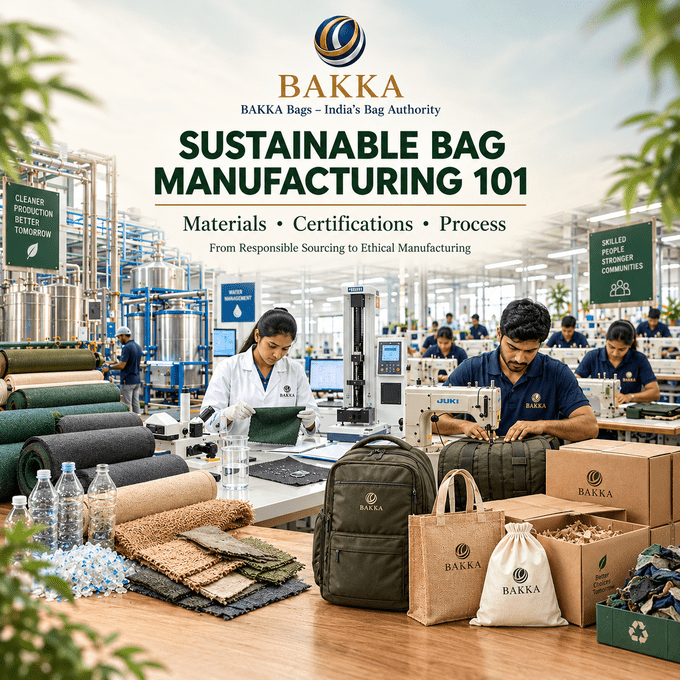
🏭 Sustainable Bag Manufacturing 101: Materials, Certifications, and Process
You Walk Into a Bag Factory in Tamil Nadu. The Owner Says: "This Bag Is Sustainable."
But what does that actually mean? 🤔
Is it sustainable because of the material? The certifications on the wall? The chemicals they're not using? The wages they're paying? The waste they're managing?
At BAKKA Bags, we've learned that "sustainable manufacturing" isn't a single choice—it's a series of interconnected decisions across every stage of production. From fiber sourcing to final stitching, from chemical management to worker welfare, from waste treatment to packaging design.
By the end of this guide, you'll understand which materials are actually better, which certifications matter, how factories manage chemicals and water, and what "fair labor" really looks like in Indian bag manufacturing. This is the knowledge that separates real sustainability from marketing theater.
🔄 The 5 Stages of Sustainable Bag Manufacturing
Every bag goes through five critical stages. Sustainability decisions at each stage compound. Fail at one stage, and all the good choices elsewhere are compromised.
Stage 1: Material Sourcing — The Foundation 🌾
Before a single thread is spun, sustainability is determined by which fiber you choose.
Recycled Polyester (RPET) — The Circular Choice
-
✅ Diverts 10–15 plastic bottles per meter of fabric from oceans and landfills
-
✅ 30–40% less energy than virgin polyester
-
✅ Produces ~2.5–3.5 kg CO₂/kg (vs. 5–7 kg for virgin)
-
⚠️ Still synthetic; sheds microplastics during washing (30–50% less than virgin)
BAKKA Standard: GRS Certified (70% minimum post-consumer content), batch-traceable, zero toxic additives, minimum 200 GSM weight.
Cost: ₹150–200/kg
Organic Cotton — The Agricultural Choice
-
✅ Zero synthetic pesticides or fertilizers
-
✅ 100% compostable (if undyed)
-
✅ Supports Indian smallholder farmers (India produces 60% of global organic cotton)
-
❌ Requires 1,800–2,700 liters of water per kg (lower than conventional cotton's 2,700–3,200 L/kg, but still significant)
BAKKA Standard: GOTS Certified, minimum 200 GSM, direct sourcing from Indian cooperatives, paired with water-resistant lining for monsoon protection.
Cost: ₹200–350/kg
Jute — India's Regional Champion
-
✅ Carbon negative — plants absorb more CO₂ than production emits
-
✅ Zero pesticides or fertilizers
-
✅ 100% biodegradable (composts in 1–2 years)
-
✅ Supports 5 million Indian farmers
-
❌ Rough texture; absorbs moisture
BAKKA Standard: Direct sourcing from West Bengal cooperatives, 50% jute + 50% GOTS organic cotton blend, water-based azo-free dyes, paired with RPET lining.
Cost: ₹100–150/kg (cheapest sustainable option)
Stage 2: Textile Processing — Where Chemicals Enter 🧪
Raw fibers must be transformed through spinning, weaving, dyeing, and finishing. This is where sustainability either happens or fails.
The Dyeing Challenge
India's textile dyeing generates 79 trillion liters of wastewater annually—contaminating groundwater in over 1,000 Tamil Nadu villages.
BAKKA Standard:
-
✅ Low-impact synthetic dyes only (40–60 L water/kg vs. 100–200 L for conventional)
-
✅ Minimum reverse osmosis treatment (95%+ contaminant removal)
-
✅ Treated water must meet discharge standards: <50 ppm COD, <10 ppm color, zero azo dyes
-
❌ We avoid: Azo dyes, formaldehyde finishes, unmanaged wastewater discharge
Energy & Quality Control
-
✅ Minimum 50% renewable energy for weaving (solar panels increasingly common in Tamil Nadu mills)
-
✅ Minimum 200 GSM fabric weight (heavier = more durable = less microplastic shedding)
-
✅ Zero formaldehyde finishes
Stage 3: Fabric Testing — Where Promises Become Proof 🧪
Every batch tested for:
-
✅ OEKO-TEX® Standard 100 (harmful substances)
-
✅ Colorfastness (prevents color bleeding → water pollution)
-
✅ Tensile strength (stronger fabric = longer lifespan)
-
✅ Water resistance (critical for monsoon use)
This is what separates certified sustainable from greenwashing.
Stage 4: Bag Assembly — Fair Labor & Durability ✂️
Sewing Quality (BAKKA Standard vs. Industry Poor Practice):
|
Metric |
Poor Standard |
BAKKA Standard |
|
Stitches per inch (SPI) |
3–4 (sparse; seams fail) |
8–10 (dense; seams last) |
|
Bartacks |
Minimal or absent |
All stress points reinforced |
|
Quality checks |
1 final check |
5–7 progressive inspections |
Worker Conditions (Non-Negotiable):
-
✅ SA8000 certification OR Fair Trade certification (required for all BAKKA partners)
-
✅ Fair wages above local minimum wage
-
✅ 8-hour working days (no forced overtime)
-
✅ Safe conditions with proper ventilation and machinery guards
-
✅ Freedom of association
Waste Management:
-
✅ Fabric offcuts from valuable materials → recycled back to suppliers
-
✅ Mixed scraps → sold to textile recyclers for fiber separation
-
✅ Zero waste target through pattern optimization
Hardware Standards:
-
✅ YKK or Riri zippers only (durable; branded)
-
✅ Solid brass or stainless steel D-rings, rivets, clasps
-
✅ GRS-certified recycled thread minimum
Stage 5: Packaging & Logistics — The Often-Forgotten Impact 📦
A bag made from 100% sustainable materials is undermined by terrible packaging.
BAKKA's Packaging Standards:
-
✅ Tissue paper only (biodegradable; no plastic)
-
✅ FSC-certified cardboard boxes (responsibly managed forests)
-
✅ Soy-based inks only (zero petroleum-based printing)
-
✅ GOTS organic cotton dust bags with natural dyes
-
✅ Recycled kraft paper padding (no foam)
-
✅ Carbon offset for every shipment
Impact Reduction: 1 order = minimal waste vs. industry standard of 1.5–2 kg packaging waste per bag.
🏆 The Certifications That Actually Matter
BAKKA requires:
For Every Material, Minimum:
-
✅ GRS (Global Recycled Standard) — for recycled materials
-
✅ GOTS (Global Organic Textile Standard) — for organic fibers
-
✅ FSC (Forest Stewardship Council) — for packaging
-
✅ OEKO-TEX® Standard 100 — chemical safety
-
✅ SA8000 — worker welfare
Red Flags (We Avoid):
-
❌ No certification at all
-
❌ Only ISO certifications (insufficient for sustainability)
-
❌ Self-certification instead of third-party verification
✨ The BAKKA Manufacturing Philosophy
We don't believe in "sustainable enough." We believe in continuous improvement across every stage.
Our Commitments:
-
🔍 Radical Transparency — Every factory partner, certification, and metric publicly listed
-
✅ Third-Party Verification — All claims auditable
-
💰 Living Wages — Workers paid above local living wage (tracked annually)
-
🚫 Zero Harm — No chemical, waste stream, or labor practice we're ashamed of
-
🧪 Continuous Testing — Every batch tested before shipment
-
🌍 End-of-Life Planning — Clear recycling/composting guidance for customers
📋 Your Checklist: Evaluating Sustainable Manufacturers
When choosing a supplier or brand, ask:
-
What certifications do they have? (GRS, GOTS, OEKO-TEX, SA8000)
-
Can they prove it? (Certificate numbers; third-party verification)
-
Where is material sourced? (Specific regions; chain of custody documented)
-
How do they manage water in dyeing? (Treatment method; discharge standards)
-
What about worker wages? (Living wage or minimum wage? Verified how?)
-
How much energy is renewable?
-
What happens to waste? (Recycling rate? Landfill percentage?)
If they can't answer 7 out of 10, be skeptical. 🚨
🎯 The Bottom Line
Sustainable bag manufacturing isn't a marketing claim—it's a system. BAKKA's commitment spans fiber sourcing, chemical management, water treatment, fair wages, waste reduction, and transparent certifications.
This is the knowledge that separates real sustainability from theater. And this is why BAKKA Bags stands as India's manufacturing authority on bags. 🏆
Let's Talk Bags
Fill the form and we will connect within 24 hours