The Ultimate Guide to Buying Bags in Bulk for Your Business I BAKKA Bags
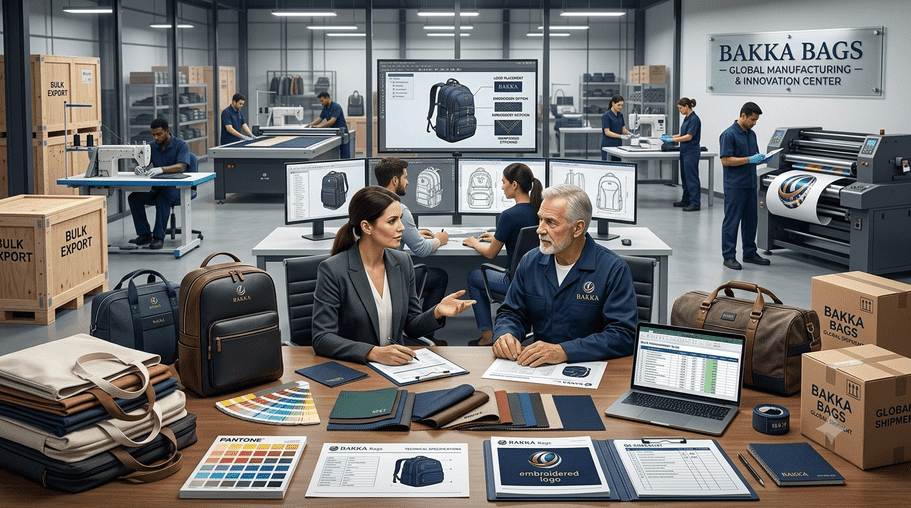
By BAKKA Bags | Bulk Bag Experts
Every bag that leaves your business carries more than just a product—it carries your brand's identity, quality promise, and the lasting impression you leave on customers. For Indian retailers, corporate teams, event organisers, and promotional agencies, sourcing bags in bulk is not just a logistics decision. It's a strategic investment in your brand.
Whether you're a fashion retailer scaling for Diwali, a corporate gifting company preparing orders, an event organisation planning merchandise, or an NGO running awareness campaigns, this guide walks you through exactly how to buy bags in bulk the right way—without guesswork, delays, or costly mistakes.
🤔 Why Buy Bags in Bulk? The Business Case Is Clear
Before diving into how, let's establish why bulk purchasing matters beyond just saving money.
- 💰 Lower Cost Per Unit — Economies of scale are real. A 5,000-unit order costs 30–40% less per bag than 500 units. That margin boost directly improves your profitability.
- 🎨 Brand Consistency — A single bulk order ensures every customer receives an identical bag—no colour drift, no quality inconsistency between batches. This builds trust.
- 📦 Inventory Readiness — Stock on hand means you're never scrambling for packaging before launches, festivals, or sales spikes. Smooth operations = happy customers.
- ✍️ Unlocked Customisation — Larger orders unlock premium options: custom hardware, woven labels, debossed logos, and waterproof coatings that smaller orders can't support.
- 🌱 Sustainable Scale — Bulk orders with eco-certified materials (RPET, organic cotton, GRS-certified fabrics) reduce your per-unit carbon footprint—critical for Indian brands with green commitments.
- 🤝 Supplier Loyalty — Consistent bulk orders build long-term relationships, earning you priority production slots, better service, and stable pricing.
📋 Step 1: Define Your Requirements Before You Contact Anyone
This is where most Indian buyers stumble. Approaching a manufacturer without a clear brief leads to inaccurate quotes, mismatched samples, and delayed timelines.
Answer these five questions first:
- What type of bag? Totes, backpacks, duffels, cooler bags, laptop sleeves, drawstring bags, or fully custom?
- What quantity? Small runs (500–1,000 units) have different timelines than large-scale orders (10,000+ units). Add 5–15% buffer for defects.
- What's your budget? Include materials, hardware, branding, packaging, shipping, and inspection costs—not just the per-unit price.
- What's your deadline? Bulk production takes time. Work backwards from your launch date and build in buffer at every stage.
- Do you need custom branding? Logos, Pantone colours, hang tags, and packaging all add steps and should be planned upfront.
💡 Pro Tip: Create a tech pack—a document with dimensions, materials, hardware, stitching specs, branding placement, and colour references. This single document eliminates 80% of back-and-forth and ensures accurate quotes.
🧵 Step 2: Choose the Right Material—It Defines Everything
The material you select determines durability, cost, aesthetics, and brand perception. In the Indian market, these choices matter for climate, usage patterns, and customer expectations.
Common choices for Indian buyers:
- Polyester canvas — Affordable, durable, and water-resistant. Ideal for corporate gifting and promotional bags.
- Cotton — Premium feel, breathable, eco-friendly. Popular for retail and conscious brands.
- RPET (Recycled Polyester) — Sustainable, certified, durable. Growing preference among Indian retailers for ESG commitments.
- Jute — Quintessentially Indian, biodegradable, strong. Perfect for eco-brands and government tenders.
- Nylon — Lightweight, water-resistant, technical. Best for outdoor and adventure brands.
Heavier fabrics (400+ GSM) offer better durability. Premium hardware (zinc alloy, nickel-plated, stainless steel) ensures longevity. Waterproof coatings add monsoon-readiness—critical for Indian climates.
🌿 BAKKA Sustainability Note: If your brand has green commitments, choose certified materials—GRS for RPET, OEKO-TEX for textiles, or certified organic cotton. BAKKA's RPET Core Collection is certified, sustainable, and ready to brand.
💲 Step 3: Understand Bulk Pricing—What Actually Drives Cost
Never mistake the lowest headline price for the best deal. Here are the real cost drivers:
- Material cost — Premium or certified materials carry higher per-unit costs but deliver quality that protects your brand.
- Order quantity — Larger orders lower unit costs through scale.
- Customisation complexity — Multi-colour prints, embroidery, custom hardware, and intricate stitching add cost.
- Packaging — Individual polybagging, branded hang tags, or custom cartons all add to the final bill.
- Incoterms — EXW, FOB, or CIF? Each shifts who bears shipping risk and cost.
- Tooling & setup fees — One-time charges for screen-printing frames, embroidery digitisation, or mould creation.
⚠️ Always request a full cost breakdown: unit price, tooling, samples, packaging, and shipping separately. The lowest headline price often hides the highest hidden costs.
🔍 Step 4: Sampling—The Step You Must Never Skip
Golden rule: A bulk order is only as good as the sample you approve from.
Never commit to large production without physically reviewing a sample first. The sampling process allows you to:
- Verify material quality and feel
- Check colour accuracy against Pantone references
- Test hardware durability and zipper operation
- Confirm branding placement and print quality
- Identify issues before they scale to thousands of units
Budget 2–4 weeks for sampling, and expect sample charges (typically refunded when you order in bulk).
🏭 Step 5: Quality Control—Your Safeguard Against Defects
In-process and pre-shipment QC is non-negotiable. Use a structured checklist to inspect:
- Stitching — 8–12 stitches per inch (SPI) minimum for durability
- Fabric — Consistent colour, no shading variations
- Hardware — No rust, sharp edges, or loose fittings
- Zippers — Smooth operation, no snagging
- Branding — Correct placement, perfect spelling, aligned logos
- AQL Level — An Acceptable Quality Limit of 2.5 is the industry standard for consumer goods
🏭 BAKKA Bags operates 7 inspection checkpoints ensuring every bag passes before leaving production. This is our commitment to your brand.
✅ Final Checklist Before You Order
- ☑️ Tech pack complete and shared
- ☑️ Final sample physically reviewed and approved
- ☑️ Colour proof signed off
- ☑️ Full cost breakdown received
- ☑️ Production timeline and milestones confirmed
- ☑️ QC inspection plan in place
- ☑️ Contingency plan for delays or defects
- ☑️ Purchase order signed with quantity, price, specs, and delivery date
🎯 Final Word: Smart Procurement Is a Competitive Advantage
Every bulk bag order is an investment in your brand. Businesses that do it right—with clear requirements, the right partner, and a rigorous process—don't just get bags. They gain consistent brand assets, reliable supply chains, and packaging experiences that customers remember.
Focus on quality over the lowest price. Invest in sampling. Ask hard questions. Choose a manufacturing partner who treats your order with precision and transparency.
At BAKKA Bags, we've helped 500+ Indian businesses—from retailers to corporates to NGOs—get bulk procurement right, from concept to final delivery, all managed in-house with full transparency at every step.
Ready to get started? Contact BAKKA Bags for a consultation, samples, and a custom quote tailored to your business. Let's build something great—together. 🛍️
Let's Talk Bags
Fill the form and we will connect within 24 hours