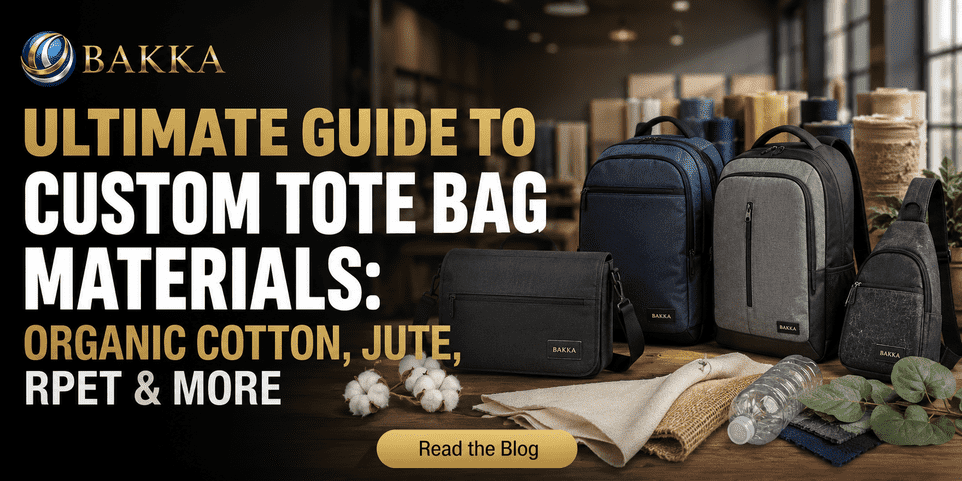
Ultimate Guide to Custom Tote Bag Materials: Organic Cotton, Jute, RPET & More I BAKKA Bags
By BAKKA Bags | The Material Intelligence Series
In the world of custom tote bags, material choice isn't just about aesthetics—it's about storytelling, functionality, and brand integrity. At BAKKA Bags, we've helped thousands of businesses navigate the complex landscape of tote bag materials, from startup eco-brands to Fortune 500 companies. This comprehensive guide breaks down everything you need to know to make informed decisions that align with your brand values, budget, and performance requirements.
🎯 Why Material Choice Defines Your Brand
Your tote bag material speaks before your logo does. A soft organic cotton tote whispers sustainability and premium quality, while recycled PET boldly announces your commitment to plastic waste reduction. Jute tells stories of natural authenticity, and canvas promises durability for the long haul.
Key considerations that impact your choice:
-
Brand perception: Material quality directly influences how customers perceive your brand values
-
Functional requirements: Weight capacity, weather resistance, and longevity needs
-
Print compatibility: Not all materials work with every customization method
-
Sustainability goals: Environmental impact from raw material to end-of-life
-
Budget constraints: Balancing cost with quality and brand positioning
📊 Material Comparison at a Glance
|
Material |
Sustainability |
Durability |
Print Quality |
Cost |
Best For |
|
Organic Cotton |
⭐⭐⭐⭐⭐ |
⭐⭐⭐⭐ |
⭐⭐⭐⭐⭐ |
$$$ |
Premium retail, eco brands |
|
Conventional Cotton |
⭐⭐⭐ |
⭐⭐⭐⭐ |
⭐⭐⭐⭐⭐ |
$$ |
General retail, events |
|
Jute |
⭐⭐⭐⭐⭐ |
⭐⭐⭐⭐ |
⭐⭐⭐ |
$ |
Artisanal brands, farmers' markets |
|
RPET |
⭐⭐⭐⭐ |
⭐⭐⭐⭐⭐ |
⭐⭐⭐⭐⭐ |
$$ |
Tech brands, outdoor events |
|
Canvas |
⭐⭐⭐ |
⭐⭐⭐⭐⭐ |
⭐⭐⭐⭐⭐ |
$$ |
Heavy-duty use, workwear brands |
🌱 Deep Dive: Premium Sustainable Materials
Organic Cotton: The Gold Standard for Eco-Luxury
What makes it special: Grown without synthetic pesticides, fertilizers, or GMOs, organic cotton represents the pinnacle of sustainable textile production. GOTS (Global Organic Textile Standard) certification ensures not just organic farming but also ethical labor practices and environmental responsibility throughout the supply chain.
Technical specifications:
-
Weight range: 140-340 g/m² (4-10 oz/yd²)
-
Load capacity: 15-35 lbs depending on construction
-
Washability: 50+ machine wash cycles
-
Print compatibility: Excellent for screen printing, DTG, embroidery, heat transfer
Why brands choose organic cotton:
-
Creates premium brand perception
-
Appeals to environmentally conscious consumers
-
Soft, comfortable hand-feel increases daily use
-
Excellent print retention and color vibrancy
-
Biodegradable and hypoallergenic
Investment consideration: 20-50% higher cost than conventional cotton, but significantly higher perceived value and customer retention rates.
Jute: Authentic Natural Appeal
The sustainability champion: Jute is one of the most eco-friendly fibers available. It grows rapidly (120 days), requires minimal water, and actually improves soil quality. The entire plant is biodegradable, making it a truly circular material choice.
Performance profile:
-
Strength: Exceptional tensile strength, naturally antimicrobial
-
Aesthetic: Distinctive rustic texture with natural color variations
-
Weight: Lightweight yet durable (typically 280-320 g/m²)
-
Print limitations: Best suited for simple designs, heat transfer, or embroidery
Perfect for:
-
Artisanal and craft brands
-
Agricultural and natural product companies
-
Farmers' markets and organic retailers
-
Brands emphasizing authenticity and tradition
Pro tip: Combine jute with cotton handles for improved comfort while maintaining the natural aesthetic.
🔄 Recycled Materials: Innovation Meets Responsibility
RPET: Transforming Waste into Wonder
The technology: RPET (Recycled Polyethylene Terephthalate) transforms post-consumer plastic bottles into high-performance tote bag material. Each tote typically contains 8-12 recycled bottles, creating a powerful sustainability story.
Performance advantages:
-
Durability: Superior tear resistance and longevity
-
Weather resistance: Naturally water-resistant without coating
-
Print quality: Smooth surface ideal for vibrant, detailed graphics
-
Consistency: Uniform texture and color across batches
Certifications to verify:
-
GRS (Global Recycled Standard) for recycled content verification
-
OEKO-TEX for chemical safety
-
Look for minimum 75% recycled content
Ideal applications:
-
Tech companies showcasing innovation
-
Outdoor and adventure brands
-
Conference and trade show giveaways
-
Brands with clear plastic waste reduction messaging
Recycled Cotton: Circular Textile Solutions
Made from pre-consumer textile waste and post-consumer cotton garments, recycled cotton reduces landfill waste while creating unique, slightly textured materials with character.
Benefits:
-
Diverts textile waste from landfills
-
Lower water and chemical usage than virgin cotton
-
Unique aesthetic with natural color variations
-
Good durability for everyday use
Considerations:
-
Texture may vary between batches
-
Slightly reduced strength compared to virgin cotton
-
Limited color consistency
🏭 Traditional Workhorses: Cotton and Canvas
Conventional Cotton: Reliable and Versatile
The most widely used tote bag material offers predictable performance, broad supplier availability, and excellent print compatibility at competitive prices.
Key advantages:
-
Extensive weight options (120-400 g/m²)
-
Consistent quality and availability
-
Excellent for all printing methods
-
Familiar feel that consumers trust
Sustainability considerations: While conventional cotton has higher water and pesticide usage, choosing suppliers with Better Cotton Initiative (BCI) certification can improve environmental impact.
Canvas: Built for Heavy-Duty Performance
Heavy-duty canvas (typically 10-16 oz) provides maximum durability for applications requiring superior load capacity and longevity.
Engineering benefits:
-
Load capacity up to 50+ lbs
-
Exceptional print surface for detailed graphics
-
Natural structure that maintains bag shape
-
Professional appearance suitable for corporate use
Best applications:
-
Tool bags and utility totes
-
Long-term promotional items
-
Retail bags for heavy products
-
Corporate gifts requiring durability
🎨 Printing Compatibility Guide
Screen Printing
Best materials: Cotton, canvas, organic cotton, RPET Advantages: Cost-effective for large runs, vibrant solid colors Limitations: Setup costs make small runs expensive
Direct-to-Garment (DTG)
Best materials: Cotton varieties (organic and conventional) Advantages: Photo-quality prints, no minimum quantities Limitations: Higher per-unit cost, best on light-colored fabrics
Sublimation Printing
Best materials: RPET and polyester blends Advantages: Full-color, all-over prints with exceptional durability Limitations: Only works on polyester-based materials
Embroidery
Best materials: Canvas, heavy cotton, organic cotton Advantages: Premium appearance, exceptional durability Limitations: Higher cost, design complexity limitations
Heat Transfer
Universal compatibility but may affect fabric hand-feel on lighter materials
🌍 Sustainability Deep Dive: Certifications That Matter
Essential Certifications
GOTS (Global Organic Textile Standard):
-
Covers entire organic textile supply chain
-
Ensures environmental criteria and social working conditions
-
Minimum 70% organic fibers required
GRS (Global Recycled Standard):
-
Verifies recycled content percentage
-
Tracks material through supply chain
-
Includes social and environmental practices
OEKO-TEX Standard 100:
-
Tests for harmful substances
-
Ensures human-ecological safety
-
Covers entire production chain
Fair Trade Certification:
-
Ensures fair wages and working conditions
-
Supports community development
-
Particularly relevant for cotton and jute
Calculating Environmental Impact
When evaluating materials, consider:
-
Water usage: Organic cotton uses 88% less water than conventional
-
Carbon footprint: RPET has 75% lower CO2 emissions than virgin polyester
-
Chemical usage: Jute requires no pesticides or fertilizers
-
End-of-life: Natural fibers biodegrade; recycled synthetics can often be recycled again
💡 Design and Construction Optimization
Weight Selection Strategy
Light (120-200 g/m²):
-
Promotional giveaways
-
Single-use applications
-
Budget-conscious projects
Medium (200-280 g/m²):
-
Regular shopping bags
-
Retail merchandise
-
General promotional use
Heavy (280-400+ g/m²):
-
Premium retail bags
-
Heavy-duty applications
-
Long-term brand ambassadors
Construction Features That Add Value
Handle optimization:
-
Reinforced stitching for durability
-
Comfortable width (1-2 inches minimum)
-
Length options: 11" for hand carry, 22-24" for shoulder
Structural enhancements:
-
Gussets for increased capacity and stability
-
Box corners for professional appearance
-
Internal pockets for functionality
Finishing options:
-
Lamination for water resistance
-
Contrast stitching for visual appeal
-
Custom zipper pulls and hardware
📈 Strategic Material Selection Framework
For Premium Retail Brands
Recommended: Organic cotton (8-10 oz) with GOTS certification Why: Creates premium perception, aligns with sustainability values, excellent print quality Budget: Higher initial investment, strong customer lifetime value
For Environmental Advocates
Recommended: Jute with organic cotton handles or recycled cotton blends Why: Clear sustainability story, biodegradable, supports regenerative agriculture Budget: Moderate cost with high environmental impact messaging
For Tech and Innovation Brands
Recommended: RPET with sublimation printing Why: Showcases innovation, excellent for complex graphics, durability story Budget: Moderate cost with strong differentiation potential
For Budget-Conscious Volume Orders
Recommended: Conventional cotton canvas (6-8 oz) Why: Reliable performance, excellent print surface, cost-effective Budget: Lower cost with proven reliability
For Artisanal and Craft Brands
Recommended: Natural jute or hemp blends Why: Authentic texture, supports craft aesthetic, strong sustainability credentials Budget: Low to moderate with high authenticity value
🔍 Quality Assurance: What to Verify Before Ordering
Material verification checklist:
-
Certification documentation: Request copies of GOTS, GRS, or other relevant certificates
-
Sample testing: Always request samples to evaluate hand-feel, print quality, and construction
-
Weight consistency: Verify GSM across the order to ensure uniform quality
-
Color fastness: Test washing and light exposure resistance
-
Dimensional stability: Check for shrinkage and distortion after washing
Supplier qualification questions:
-
What is the exact recycled content percentage? (For RPET)
-
Can you provide chain of custody documentation?
-
What quality control measures are in place?
-
What is the expected lifespan under normal use?
-
What are the care instructions for end users?
🚀 Innovation Trends: What's Next in Tote Materials
Emerging sustainable options:
Recycled ocean plastic: RPET made specifically from ocean-bound plastic waste Mushroom leather: Mycelium-based alternatives for luxury applications Agricultural waste: Materials made from rice husks, wheat straw, and other crop residues Bio-based synthetics: Plant-based polyesters and other renewable polymers
Technology integration:
Smart fabrics: Integration of RFID or NFC technology for digital interaction Antimicrobial treatments: Natural treatments for enhanced hygiene Color-changing materials: Temperature or light-responsive inks and fibers Water-repellent natural coatings: Plant-based alternatives to synthetic treatments
🎯 The BAKKA Bags Advantage: Expert Material Sourcing
At BAKKA Bags, we've built relationships with certified suppliers worldwide to ensure you get authentic, high-quality materials that align with your brand values. Our expertise includes:
Comprehensive material testing:
-
Physical testing for strength and durability
-
Print compatibility verification across all methods
-
Certification validation and supply chain transparency
-
Environmental impact assessment and lifecycle analysis
Custom material development:
-
Blend creation for specific performance requirements
-
Weight optimization for your application
-
Color matching and consistency assurance
-
Sustainable innovation partnerships
Supply chain transparency:
-
Direct relationships with fiber producers
-
Regular facility audits and certification updates
-
Traceability documentation for every material
-
Sustainability impact reporting
💼 Implementation Roadmap: From Selection to Success
Phase 1: Requirements Definition (Week 1)
-
Define use case and performance requirements
-
Establish sustainability goals and budget parameters
-
Identify print methods and design complexity
-
Set quality standards and certification needs
Phase 2: Material Evaluation (Week 2-3)
-
Request samples of recommended materials
-
Conduct internal testing and stakeholder review
-
Validate print quality with test designs
-
Confirm certification and sustainability claims
Phase 3: Design Optimization (Week 4)
-
Finalize construction specifications
-
Optimize design for chosen material
-
Confirm print method and color specifications
-
Establish quality control parameters
Phase 4: Production and Quality Assurance (Week 5-8)
-
Pre-production sample approval
-
In-line quality monitoring
-
Final inspection and certification verification
-
Packaging and delivery coordination
🔮 Making the Right Choice for Your Brand
The perfect tote bag material balances your brand values, functional requirements, and budget constraints. Here's our final recommendation framework:
For maximum sustainability impact:
Choose organic cotton with GOTS certification or natural jute for biodegradable options, or RPET with high recycled content for plastic waste reduction messaging.
For premium brand positioning:
Select heavy organic cotton (10+ oz) with premium construction features like reinforced handles and professional finishing.
For maximum durability and performance:
Opt for canvas or RPET with appropriate weight selection based on intended load capacity.
For authentic artisanal appeal:
Choose natural jute or hemp blends with simple, elegant customization that highlights the material's natural beauty.
For innovation and technology brands:
Select RPET with sublimation printing capabilities for vibrant, complex graphics that showcase forward-thinking values.
🤝 Partner with BAKKA Bags for Expert Material Guidance
Choosing the right material is just the beginning. At BAKKA Bags, we provide end-to-end support to ensure your custom tote bags perfectly represent your brand and meet your performance requirements.
Our comprehensive services include:
-
Material consultation: Expert guidance based on your specific needs and goals
-
Sample programs: Risk-free evaluation of materials and print methods
-
Sustainability verification: Third-party certification validation and impact reporting
-
Custom development: Unique material solutions for special requirements
-
Quality assurance: Comprehensive testing and inspection protocols
-
Supply chain transparency: Full traceability and ethical sourcing documentation
Ready to create tote bags that truly represent your brand? Contact BAKKA Bags today for expert consultation and sample materials. Let's build something extraordinary together.
At BAKKA Bags, we believe every tote bag tells a story. Make sure yours tells the right one with materials that align with your values, meet your performance needs, and exceed your customers' expectations. From organic cotton to innovative recycled materials, we're here to help you make the perfect choice.
Let's Talk Bags
Fill the form and we will connect within 24 hours